Spotlight: Dezi Riley of the masterMind Cooperative
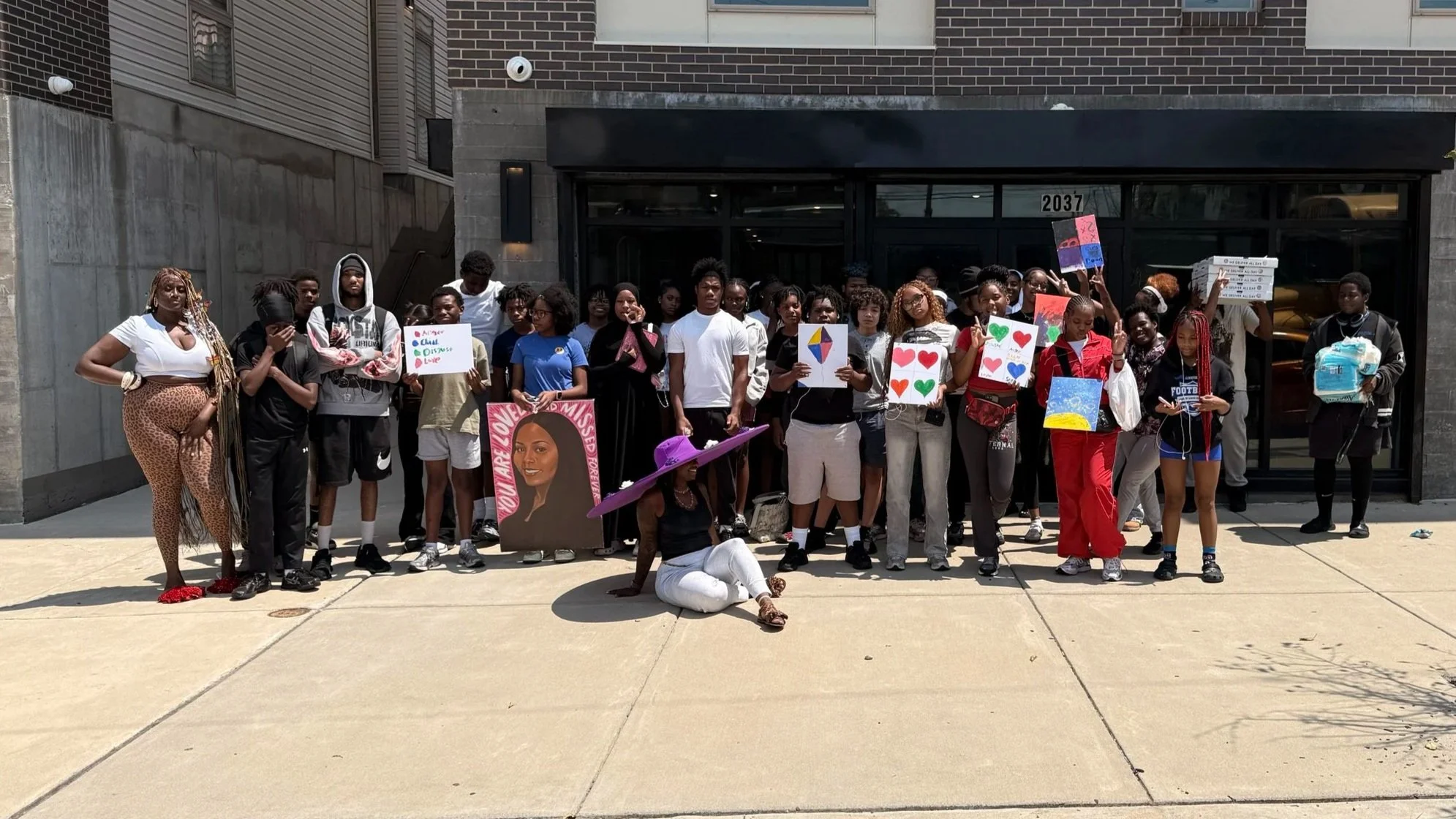
“I definitely want them to feel limitless. That is something that is really important to me because I feel like they have too much hopelessness. I feel like they feel like there’s limits everywhere. I just want them to feel like a life without certain limits is possible. ”
Desiree “Dezi” Riley, the founder of The Mastermind Cooperative, wants the people she works with to feel limitless–to find opportunities when others try to give them barriers.
In 2019, Riley founded The Mastermind Cooperative, a nonprofit inspired by an organization she started in 2013 called Young, Black, and Hustling. With Young, Black, and Hustling, she connected with people in the community to do networking events, artist showcases, business bruncheons, pop-ups, and more.
Building on this initiative, The Mastermind Cooperative aims to improve the quality of life of people impacted by systemic inequities, incarceration, and community violence, and to make their goals and dreams accessible.
Riley is inspired by her own upbringing and by personally seeing the differences in accessibility across communities. As a child, she moved often and attended public and private schools in Philadelphia and Columbus, Ohio. For a couple of years, she attended a public school in Westchester, a Philadelphia suburb. “That was a regular, well-resourced school with amazing fairs and activities. I say like it just was way different than even Philly private school. And I just had a very diverse educational and just social experience,” she said.
In her early adulthood, while working on her MPA, Riley faced incarceration resulting in a class X felony: “My family and an attorney helped me come home. I faced two years' probation, and dropped my class X to a class one. I wrote a book about it called Felony to Freedom: Journey to Liberating an Institutionalized Mind… and then basically my whole life was kind of just different. Like I couldn't just get a job as easily.”
These experiences motivated Riley. Through her initiatives, she wanted to build community, create access and pathways to careers, help youth develop skills, and encourage people to pursue their dreams, despite the systemic barriers they may face.
About the youth she works with, Riley said, “I definitely want them to feel limitless. That is something that is really important to me because I feel like they have too much hopelessness. I feel like they feel like there's limits everywhere. I just want them to feel like a life without certain limits is possible. Of course, while we're alive on this plane, there are always limits, but just without the limits that aren't real. They may be real because they're imposed by the system or our environment, but there's a reality that they can access through some type of strategic maneuvers; they can achieve a semblance of freedom, and it's possible. And it will take work, it'll take intelligent action, it'll take a lot of things, but if they try, they can get there.”
To help address multiple goals, The MasterMind Cooperative currently has two main initiatives: Project Phoenix and Green Hubs. Project Phoenix focuses on supporting youth and helping cultivate the next generation of leaders. Their latest program has about 50 youth. Local entrepreneurs, activists, and leaders offer training and activities. For example, Kristal Bush, local entrepreneur, founder of Free My Weed Man, and documentary filmmaker, led a recent session. For this session, the youth came up with a business and did a pitch contest. The other youth voted, and the winner received $100.
Entrepreneurship is central to Riley: “[Another week] Somebody else did a flyer contest and they won $100... So just try to keep [youth] engaged. Keep them thinking, as you can make it. Okay, send me a business plan. What did you do today? In this latest program, we're like adding hair braiding, fashion design, and fitness into that, as well as like content creation and stuff like that, because we know multiple streams of income are very important.”
Green Hubs is “dedicated to transforming vacant lots in Philadelphia’s underserved neighborhoods into vibrant green spaces that foster environmental sustainability, community resilience, and holistic wellness.” Green Hubs also supports training for landscaping, tree services, and solar installation.
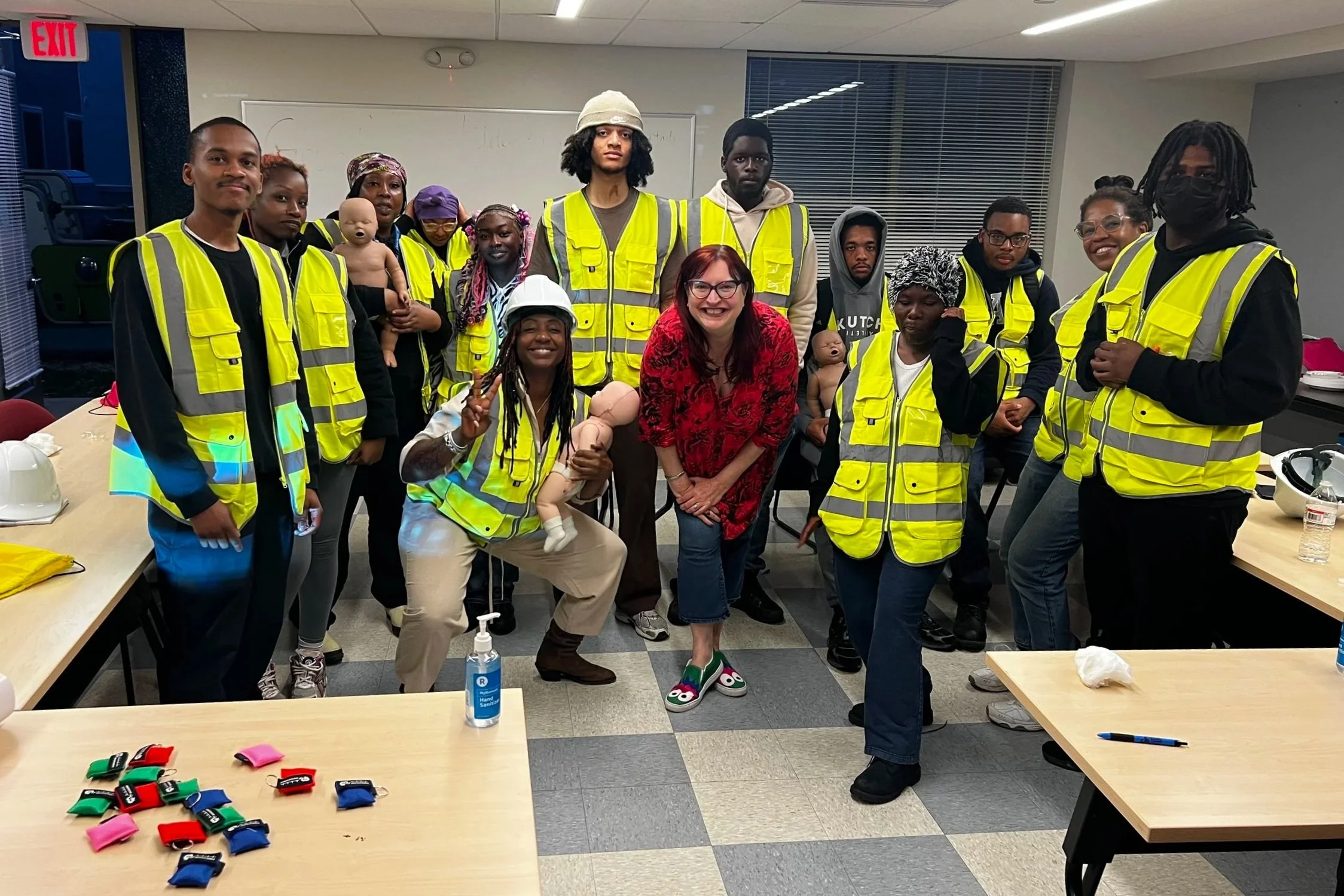
A large aim of both projects is exposure and creating access to different careers. Even her collaboration with Y.A.R.N. has this intention; Riley hopes it will help inspire and create opportunities for youth in the program. A self-described social scientist at heart, Riley was previously in a masters program in which she got to practice research. Through Y.A.R.N., she hopes youth and community members will learn more about what it means to be researchers and the paths they can take to pursue that interest.
Riley said: “We do Y.A.R.N. We have connections with Community First Fellows and the University of Penn Community Scholars Program. I’m so totally enthralled in the experience, we can still be social scientists, even if it's not through a degree program. And I think that's what really keeps me engaged. Like, what can we do with this work? How can we teach kids to be researchers or understand research, even if it's not on the academic track or even if it's market research for entrepreneurship or whatever.”
This limitless mentality isn’t just for those who are part of the program; it’s the mentality she has with The MasterMind Cooperative herself. When they run into a challenge, Riley works to find solutions. Riley aims to address multiple issues facing the community and the limitations that often prevent people from participating in community-based programs.
“Like when we run a program, we're doing stipends. If we're asking you to come to a listening session, you're getting a stipend. We're collecting data, [if] we're extracting from you, we're pouring into you. Even if we don't have funds available, we're having high-end meals. We're going to have a spread. It's going to be a good time. If we have funds available, not only are you getting the food, you're getting the stipend. You're going to have childcare available. We're going to give you money for your transportation to get here. If it's a program, you're going to have PPE, not cheap PPE. You're going to have Caterpillar boots, Timberland pro boots.”
Despite her best efforts, Riley recognizes that there are barriers. Though they aim to make the program as accessible as possible, she has a small team, none of whom are working full-time for The MasterMind Cooperative, and like many nonprofits, they struggle with funding.
“To be honest, the funding situation was so frustrating to me this year. I remember I told somebody, this is like my last year running programs. There’s these like reimbursable grants, certain grants that will allow you to expend everything and they think it's ok to pay you back three months later. It's crazy.”
But the youth’s passion for the program and their accomplishments keep her motivated.
“I talked to some of the kids last week, and I was like, “you like the program?” “Oh, yeah, it's a bip. I'm coming back every year.” I was thinking like, wait, I didn't, I was doing this again. They say they gonna come back again every year. So, those are the things that made me want to keep it going. But I would love to do collaborations and stuff. It's really hard not to run out. The team is great though. The kids are great. As long as it's sustainable, I would love to grow.”
Collaborating with other organizations creates an opportunity for The MasterMind Cooperative to grow and sustain its initiatives. Riley hopes that working with other Philadelphia-based youth justice organizations will help them learn from each other, learn skills to support their organizations, and connect youth to interests and resources. Riley said, “Hopefully with connecting people and everything, it'll help. Everybody together, kind of figuring out things. Making things fun.”
Collaborating with Y.A.R.N. specifically, Riley said: “We’d love to figure out ways that Y.A.R.N. can help us place some of these kids to get degrees so they can become academic researchers in their own communities. We can have PhDs from our own communities, and we can help get their education funded. To me, that's my long goal with Y.A.R.N. I feel like if there's anything that could be most impactful besides collecting the data and teaching the kids how to collect data, [it’s] like how can we make them the researchers of today?”
As to the future of The MasterMind Cooperative, Riley has big plans.
For the future of Green Hubs: “Green Hub is just open to the community. It's just the space. Yeah, Green Hubs themselves, like we have the one proof of concept at 21st and West Tioga, where we do activities. We have started working at Lonnie Young, but they had some change in management and things like that… We don't do a whole lot yet, but the goal is to have multi-generational activities like picnic tables with covers so the elders across the street can sit and drink tea or read their books. And then a calisthenics pull-up bar area over here where citizens, anyone else who's interested in doing pull-ups can go, and a greenhouse over there. You know, so that idea is for it to be in picnic tables and like places where kids can play. The idea is definitely to be multi-generational.”
For Project Phoenix, the team members and youth are preparing for the Disruptor Fest at the end of September: “The Disruptor Fest is almost like a science fair mixed with a talent show mixed with like a large vending event, like a pop-up shop. So just think of creatives coming together to share what it is that they created: whether it's art, fashion, science, some invention, a book, products, whatever it is. And that's the disruptor fest.”
To keep up with The MasterMind Cooperative and their upcoming events, visit their website or follow them on Instagram.
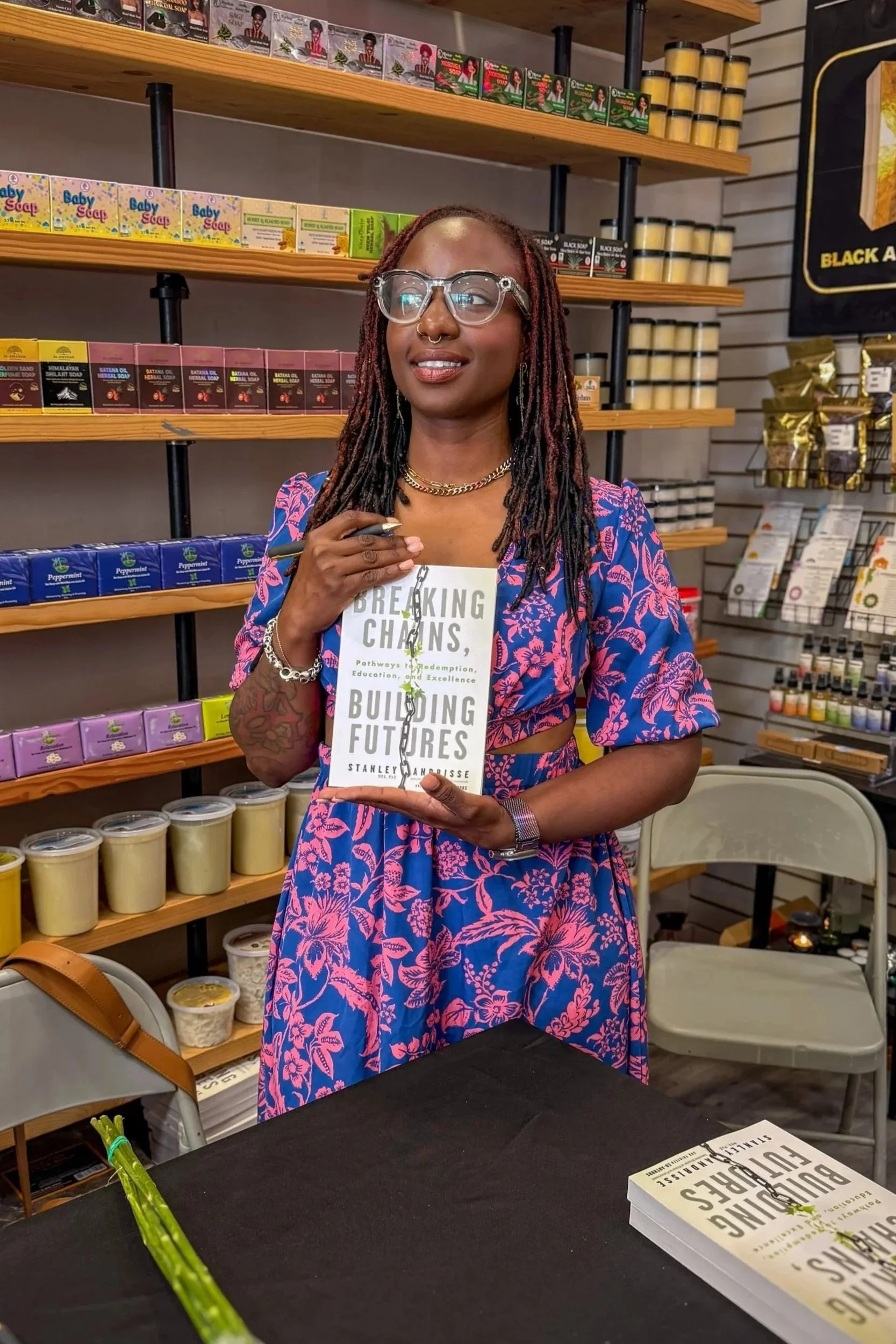
Dezi Riley is a mother of five, entrepreneur, and author. She is the founder of The MasterMind Cooperative and an alumna of The Ohio State University. She authored Felony to Freedom: Journey to Liberating an Institutionalized Mind, in 2023, sharing the impact of her incarceration and her journey after. In 2025, she co-authored Breaking Chains, Building Futures: Pathways to Redemption, Education, and Excellence, a collection of first-hand accounts of life behind and beyond bars.